Why Did You Join Your Choir?
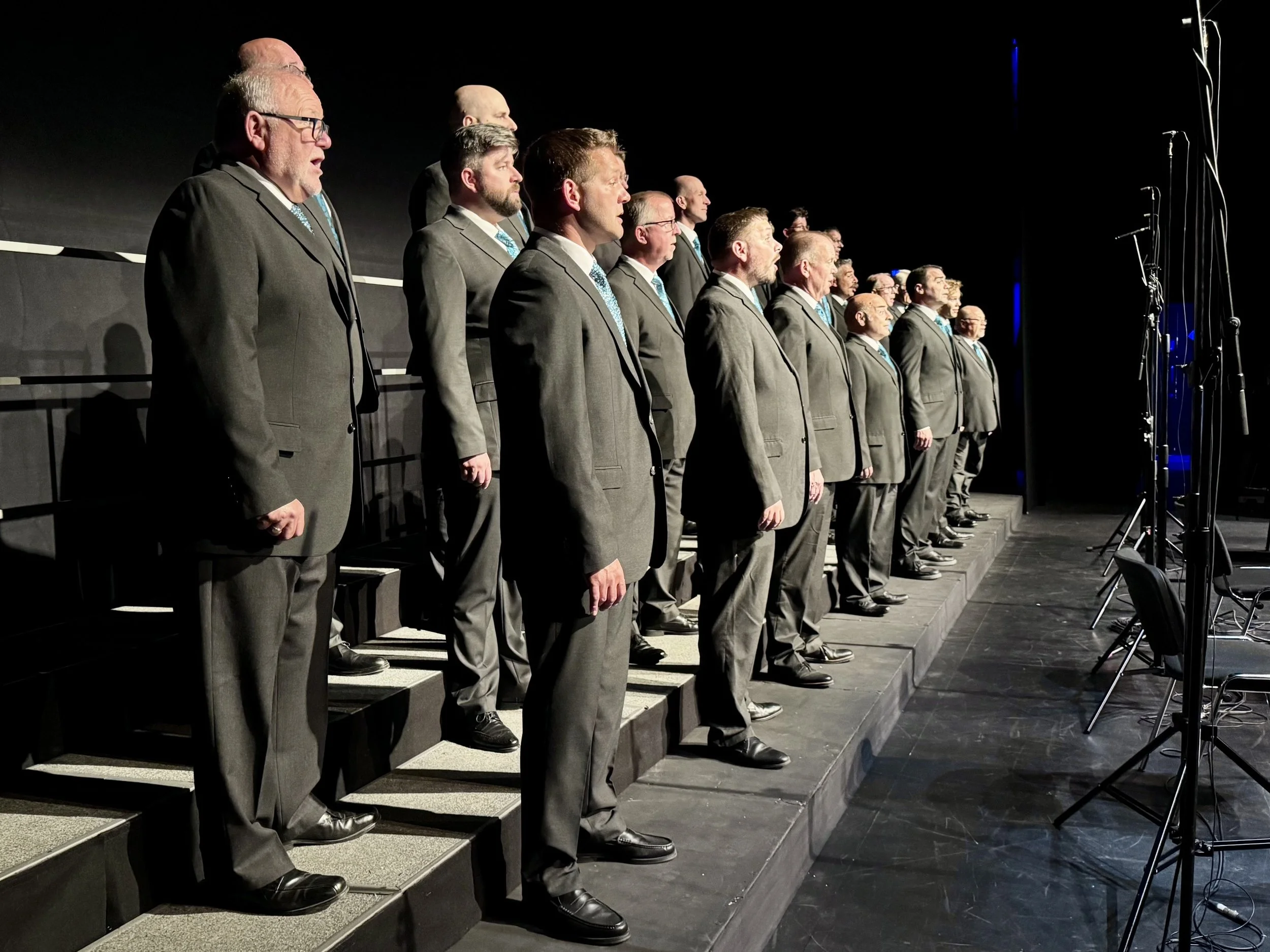
Spend five minutes in the bar after a rehearsal and you'll hear a familiar phrase: "We're just a social choir." Visit another rehearsal and you'll hear its mirror image: "We take the music seriously here."
These are often presented as opposite philosophies, as though every choir has to decide whether it exists primarily for friendship or for musical excellence.
I am no longer convinced that's the right question.
Recent research led by Professor Stephanie Pitts at the University of Sheffield, commissioned by Peterborough Sings!, suggests something rather different.
After surveying hundreds of singers and musical directors across the UK, the researchers found that choirs were not most satisfied because they were especially ambitious, nor because they were especially relaxed. They were most successful when the expectations of members and musical directors were broadly aligned.
That may sound obvious, but I suspect it explains a great deal about why some choirs thrive while others quietly struggle.
Every choir is made up of people who arrive with different histories. Some sang throughout school, others have not opened their mouths since they were fourteen. Some enjoy the discipline of learning difficult repertoire, others simply enjoy singing alongside friends on a Monday evening. Neither motivation is more worthy than the other.
The difficulty begins when a choir assumes that everyone is there for the same reason.
A singer who joins hoping to develop musically will quickly become frustrated if rehearsals are devoted almost entirely to note-learning and social chat. Equally, someone seeking companionship and enjoyment may find an intensely competitive rehearsal culture exhausting. Neither person has chosen the wrong choir. More often, the choir has failed to explain what it is trying to be.
This is particularly significant in the male voice choir movement because our tradition has always carried two identities simultaneously. Male voice choirs have never simply been performing ensembles. They have been social institutions, rooted in communities, workplaces and shared identities. Yet they have also produced extraordinary musical standards. Historically, those two things were not regarded as contradictory. The fellowship existed partly because members wanted to sing well, and they sang well because they rehearsed within communities that expected commitment.
Somewhere along the way, we've started to separate these ideas. Musical ambition is sometimes portrayed as being at odds with inclusivity, while an emphasis on wellbeing is occasionally interpreted as permission to lower expectations. I don't believe either conclusion follows.
In fact, the Sheffield research points in almost the opposite direction. Choir members frequently described musical progress as one of the reasons they enjoyed belonging to their choir. Achievement and enjoyment were not competing priorities. They reinforced one another. Likewise, choirs with a strong sense of belonging were often better placed to sustain the commitment needed to improve. Social wellbeing and musical development were not rivals. They formed part of the same experience.
Where this becomes particularly interesting is in the role of the musical director.
The research highlights something many conductors will recognise immediately: members of lower voice choirs often arrive with very different levels of musical knowledge. Many have little experience of reading music and rely heavily on the conductor to teach new repertoire. That means the conductor's task extends well beyond preparing concerts. They are teaching people how to sing.
I sometimes think we misunderstand what we ask of musical directors. We expect them to produce performances, but we often overlook the fact that they are also building the instrument that produces those performances. In many lower voice choirs the conductor must simultaneously develop vocal technique, listening skills, musical literacy and ensemble awareness while also interpreting the music. As I have said before, they are expected to be both driver and mechanic.
That makes clarity of purpose even more important. A conductor cannot effectively develop a choir if members are working towards different destinations. Likewise, members cannot reasonably judge a conductor's success without understanding what the choir is trying to become.
Perhaps that is the conversation more choirs need to have.
Not whether they are social or musical.
But what success actually looks like.
Because once that question is answered honestly, many other decisions become much easier. Repertoire choices begin to make sense. Rehearsal styles become more consistent. Expectations become clearer. New members discover quickly whether the choir is the right fit for them.
The best choirs I know are not necessarily the most ambitious, nor the most relaxed. They are the ones in which everyone understands, and broadly shares, the purpose of being there.
Five questions every choir should ask:
Why do people join our choir?
If every member wrote down their reason for joining, would the answers be broadly similar, or would they reveal very different expectations?What does success look like?
Is success measured by musical improvement, competition results, audience engagement, friendship, community service, or a combination of these? If the answer isn't clear, neither are your priorities.Do our rehearsals reflect our ambitions?
If you say musical development matters, is rehearsal time spent developing singers, or simply learning notes? If you say fellowship matters, do rehearsals leave time for members to build relationships?Do new members understand what they're joining?
Within their first few weeks, would a newcomer be able to describe the choir's purpose and expectations accurately?Are we trying to become a better choir, or simply remain a comfortable one?
The two are not mutually exclusive, but every choir should know where it sits on that spectrum and ensure its members are travelling in the same direction.