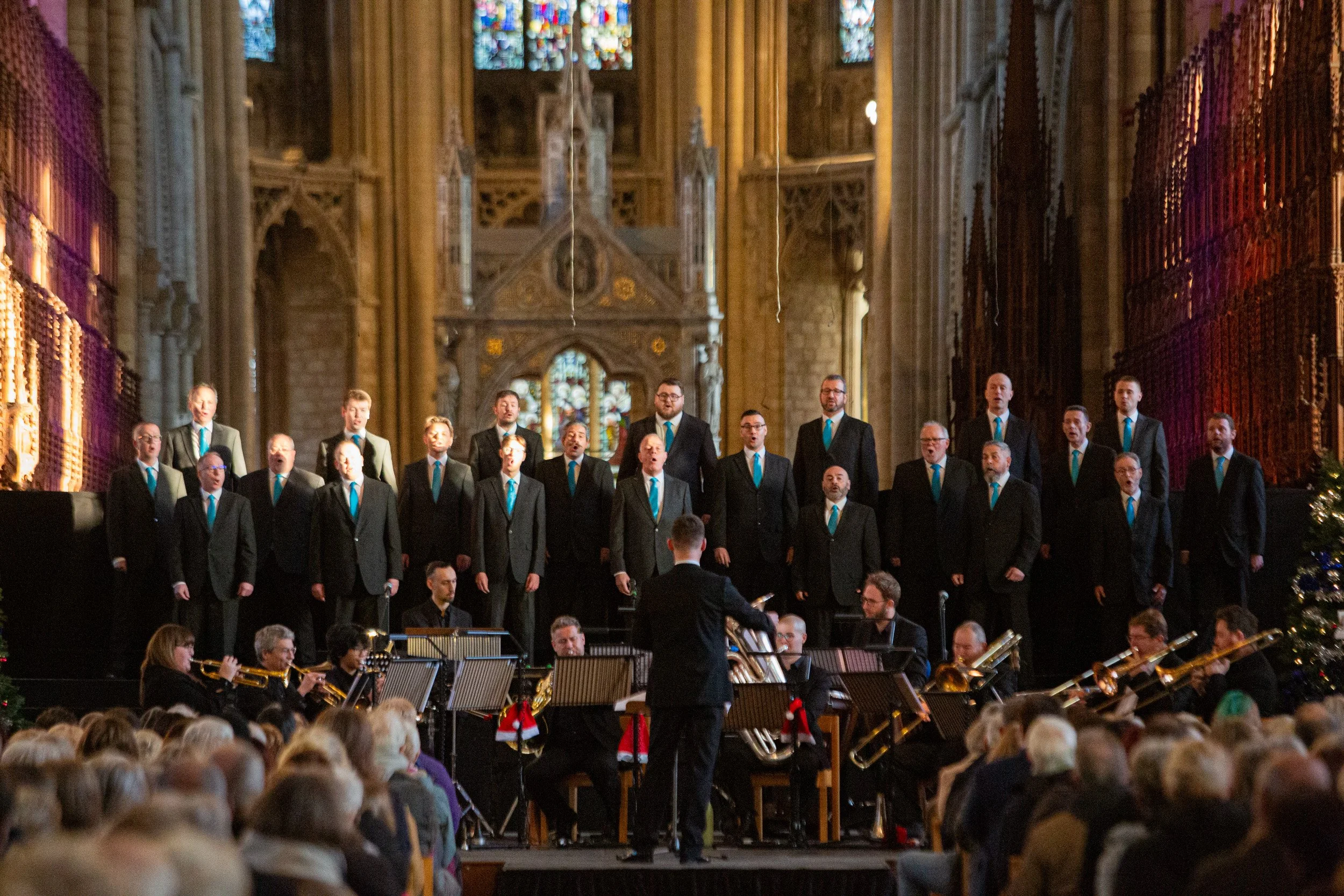
When did you last programme a concert, rather than simply choose the music for one?
It's a question I'd like to put to conductors and musical directors of lower/male voice choirs (MVCs) across the country. Because, if we're being critical, much of what passes for concert programming in the MVC world isn't really programming at all. It's choosing enough songs to fill a couple of hours.
We all know the typical MVC concert. There's a selection of familiar favourites, perhaps a couple of newer pieces, a hymn tune or two, and something suitably rousing to finish. The music might be loosely arranged into sets, but more often the running order seems primarily concerned with alternating faster and slower pieces, separating the more demanding items, and ensuring that the choir has enough breath left for the finale.
And then there's the guest soloist, who arrives with a selection of pieces that often have little or no relationship with anything the choir is singing. The soloist and choir are effectively presenting two separate concerts, interspersed with one another.
None of this necessarily produces a bad evening's entertainment. Audiences enjoy familiar music, and choirs enjoy singing pieces they know well. But is that really the extent of our artistic ambition?
There's a difference between choosing repertoire and programming a concert…
The former is about deciding what the choir is going to sing. The latter is about deciding what the audience is going to experience.
A thoughtfully constructed concert can explore an idea, tell a story, establish connections between pieces, and take an audience on a musical journey. Contrasts of style, texture and emotional character become deliberate artistic choices rather than happy accidents. Even the contribution of a soloist can become an integral part of the programme, rather than an entertaining interruption.
Themed programming is commonplace in much of the wider choral and classical music world, yet remains surprisingly unusual among MVCs. Perhaps that's partly a consequence of limited rehearsal time and the practical demands of preparing amateur singers for regular performances. It's understandable that musical directors return to music their choirs already know.
But there's a danger that the repertoire we've inherited begins to determine the concerts we present, rather than the other way around. We perform certain pieces because we've always performed them, and programme concerts around what's available in the library.
I think we can do better than that.
A challenge to musical directors…
I'd like to invite musical directors to devise a complete themed concert programme for their own choir. Not an imaginary ensemble with unlimited rehearsal time and professional singers, but the choir they actually conduct, with all its strengths, limitations and practical realities.
You can choose your own theme. It might be something straightforward, such as Songs of the Sea, Folksongs, Remembrance or America. Alternatively, you might try something more imaginative: Love and Longing, Into Battle, Home and Away or Faith and Doubt.
What matters is that the theme provides a genuine artistic framework, rather than simply a convenient label attached to an otherwise unrelated collection of songs.
You can also choose the format: either a full concert of two 45-minute halves, with an interval, or a shorter recital of approximately 70 minutes, performed without a break.
But there are a few rules.
The rules…
1. Everything must belong. Every item, including any contributions from guest soloists, must have a meaningful relationship with the chosen theme. The soloist's repertoire should be planned as part of the concert, not added afterwards.
2. No more than two familiar MVC standards. You know the sort of thing: An American Trilogy, Stout-Hearted Men, Comrades in Arms, Men of Harlech, Speed Your Journey, and so on. This includes more contemporary favourites such as You Raise Me Up and Bring Him Home. These aren't necessarily bad pieces, but their inclusion should be an artistic decision rather than an automatic one.
3. Hymn tunes must earn their place. Include them where they make sense within the theme, not simply because the choir traditionally sings one in every concert.
4. At least 75% of the choral programme must consist of music originally composed for men's voices. Not TTBB arrangements of music originally conceived for other forces, but works specifically written for male or lower voices. Calculate this by approximate performance duration, excluding guest solo items. There's an enormous body of original repertoire available. Let's explore some of it.
5. Include at least one work by a living composer. Male voice choral composition didn't end in the middle of the twentieth century.
6. Include at least one work by a composer who is not a white man. This can be the same piece that satisfies the previous requirement, or a different one. Let's look beyond the relatively narrow range of composers whose music traditionally dominates MVC programmes.
7. Keep it realistic. The programme must be achievable by your existing choir, allowing for its abilities, resources and available rehearsal time. By all means incorporate two or three pieces from your standing repertoire, provided they genuinely fit the theme.
8. Musical variety matters. A coherent theme doesn't mean seventy or ninety minutes of music in the same style or emotional register. Think about contrast, pacing, texture and the overall shape of the concert.
Beyond those parameters, the artistic decisions are yours.
What I'm looking for…
I'd like you to post your proposed programme in the comments below this blog. Include a complete running order, identifying each work, its composer and approximate performance duration, together with any solo contributions.
Alongside the programme, provide a short explanation of around 200 to 300 words outlining your artistic thinking. Why did you choose the theme? How have you approached the selection and ordering of the music? What experience are you hoping to create for your audience?
I'm particularly interested in how you've balanced artistic ambition with the practical capabilities of your choir. A brilliantly conceived programme that would require three years of rehearsal isn't necessarily more impressive than a carefully constructed concert that a modest amateur choir could prepare in a few months.
And one further request: identify two or three works from your programme that you'd particularly recommend to other MVC conductors. They might be unfamiliar compositions, pieces that have worked especially well with your singers, or music that you think deserves to be heard more widely. Tell us briefly why they're worth investigating.
A few set menus for the less confident diner…
I'm not proposing this simply to discover who can put together the cleverest concert programme.
One of the difficulties facing musical directors, particularly those working with smaller or less experienced choirs, is knowing where to start when looking beyond the familiar repertoire. There's an extraordinary amount of music available for men's voices, but identifying suitable works and assessing their technical demands takes time.
So I'd like to use the submissions to create a publicly available collection of themed concert programmes for MVCs. I'll draw together a selection of the most interesting, imaginative and practical proposals, with appropriate credit to their creators, so that other conductors can explore them.
Think of it as providing a few set menus for the less confident diner.
You might take one of these programmes and perform it more or less as presented. You might adapt it to suit your choir, or simply discover two or three unfamiliar works that eventually find their way into an entirely different concert.
I'd particularly welcome submissions from conductors of ordinary community MVCs. This isn't intended to be a showcase exclusively for large or highly accomplished ensembles. Devising an imaginative and coherent programme for a choir with modest technical resources requires just as much creative thought as programming for an advanced group.
And if you're not ready to propose a complete programme, you're still welcome to contribute to the discussion by recommending an interesting or underperformed work that other conductors might investigate. But I'd particularly encourage you to have a go at the full challenge.
Programming is part of musical leadership…
As musical directors, we have considerable influence over the artistic direction of our choirs. We decide which music our singers encounter, what challenges we place before them, and how their work is presented to the public.
If we continually return to the same familiar material, we shouldn't be surprised when our singers, audiences and potential recruits come to regard that material as defining the limits of male voice choral singing.
That doesn't mean abandoning the traditional repertoire. Much of it is valuable, and some of it is genuinely excellent. But tradition should be something we draw upon, not something that confines us.
A concert programme ought to be more than a convenient collection of pieces that the choir happens to know. It should reflect thought, judgement, imagination and a willingness to explore. Those are, after all, among the things we should expect from musical leadership.
So, to my fellow MVC conductors and musical directors, here's the challenge.
Choose a theme. Think beyond your existing library. Find some music you haven't conducted before. Consider what you want your audience to experience, rather than simply what your choir already knows how to sing.
Then post your programme in the comments below. Read what others have suggested, explore unfamiliar repertoire, and contribute your own ideas.
Let's see what we can come up with, and perhaps give the rest of the male voice choir world something worth singing about.