Stumbling across a performance by a male voice choir on Facebook where the intonation is insecure, the blend inconsistent, and sheer volume seems to take precedence over tonal quality is hardly unusual. I'm sure you've encountered a few howlers yourself...
Generally speaking, I'm inclined to be forgiving. Keeping a male voice choir going in 2026 is an achievement in itself. Across the country, choirs are struggling with ageing memberships, recruitment difficulties and the challenge of sustaining musical activity in communities where the social structures that once supported them have largely disappeared.
When I watch one of these less-than-perfect performances, I'm usually reminded that here is a group of people who have turned up, given their time and done their best to entertain an audience. They may not be delivering a particularly accomplished performance, but they're participating in something valuable. There's something genuinely heartwarming about that. A choir doesn't need to be brilliant to be worthwhile.
And I'm hardly in a position to pretend that every performance by my own choir has been magnificent. There are some distinctly unflattering recordings of Peterborough Male Voice Choir online, particularly from the first five years of my tenure, which I would be quite happy never to hear again. Musical development takes time, and I'm well aware that the standards we aspire to aren't necessarily those we achieve on every occasion. And, of course, the same scrutiny should apply to anything we claim about ourselves today. Our achievements don't exempt us from having to justify the expectations our publicity creates.
But one particular video posted recently left me with some different thoughts...
To my ears, the intonation was insecure, the sound poorly blended and the musical phrases seemed to run out of energy long before reaching their conclusion. Curious, I watched several other recent performances by the same choir and heard similar difficulties. Social media recordings aren't always representative, of course, but these were performances the organisation had chosen to share publicly.
Then I visited its website.
And that was when things became interesting...
The website was full of glowing endorsements, enthusiastic testimonials and accounts of world-class performances. The impression was unmistakable: this wasn't merely a good choir, but one of the greatest ever to have existed.
The historic achievements were genuine. The reputation had been earned. But the performances I had watched seemed a considerable distance from the excellence suggested by the website.
And that was what bothered me. Not that the choir had delivered some disappointing performances, but that the picture it presented of itself seemed so different from the musical reality I had encountered.
What happens when the choir we describe is no longer the choir that audiences hear?
The choir we think we are…
Every organisation has a story it tells about itself. For some choirs, that story is about friendship, community and the joy of singing together. For others, it's about musical ambition, artistic achievement or the preservation of a distinguished tradition.
These identities matter. They influence recruitment, repertoire, rehearsal expectations and the way audiences understand what they're coming to hear.
But organisational identities can become remarkably resistant to change. A choir may continue to describe itself in the language of its greatest achievements long after the singers, leadership and circumstances that produced those achievements have changed.
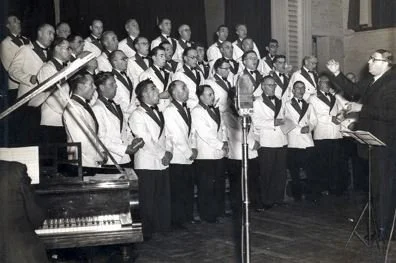
Some of our most celebrated male voice choirs built their reputations through competition victories in the middle decades of the twentieth century, prestigious recordings and international performances. Those achievements remain part of their history, but they don't necessarily tell us much about the musical standards of the choir standing on stage today.
The difficulty arises when an organisation's historical identity becomes indistinguishable from its contemporary claims.
There's nothing wrong with saying, "We have a history of extraordinary musical achievement." But that's rather different from suggesting, "We remain an extraordinary musical ensemble."
One describes the past. The other describes the present. And the present requires its own evidence.
The twenty-year-old Tinder photograph…
Imagine creating a Tinder profile using photographs of yourself taken twenty years ago. You looked magnificent. The hair was thicker, the waistline smaller and the whole presentation considerably more flattering than anything your phone camera might capture today.
Those photographs aren't fake. They really are you. But they aren't you now.
And if someone arranges to meet you on the strength of those photographs, you can hardly be surprised if they feel the presentation was a little misleading.
Some choirs seem to have developed a similar relationship with their public identities. Their websites are full of claims, achievements, reviews and testimonials from previous generations, while the contemporary evidence of musical excellence is considerably less convincing.
And, just as with the dating profile, the greater the distance between the presentation and the reality, the more uncomfortable the eventual encounter becomes.
Heritage isn't a guarantee of excellence…
Perhaps some historic ensembles are best understood as heritage choirs. Their principal purpose might be to preserve the repertoire, sound and traditions of an earlier generation rather than pursue contemporary musical innovation. That's a perfectly legitimate ambition.
Consider a classic car displayed at a prestigious motor show. Nobody expects it to accelerate like a modern McLaren. Its technology, handling and performance belong to another era, and that's part of its appeal.
But visitors do expect it to be immaculate. The paintwork should gleam, the chrome should sparkle and the engine should run beautifully. Indeed, the more illustrious its history, the higher those expectations become.
Surely the same should be true of a heritage choir?
It doesn't need to perform contemporary repertoire or compete with the world's most progressive ensembles. But within its chosen tradition, we should expect secure intonation, disciplined ensemble, beautiful phrasing and musical refinement.
These aren't modern innovations. They're precisely the qualities that made the great male voice choirs of the past so extraordinary.
A heritage identity may explain what a choir chooses to sing. It doesn't automatically justify how well it sings it.
And if an organisation chooses to present itself as an outstanding example of that tradition, it should be prepared for audiences to assess its performances against that claim.
When the story becomes more important than the evidence…
An illustrious reputation is a valuable organisational resource. Famous choirs inherit recognition, prestige and opportunities that less established ensembles must work hard to secure.
But inherited reputations also create a challenge. If audiences continue to attend, concert invitations continue to arrive and publicity continues to proclaim an organisation's greatness, what encourages its leadership to question whether the description remains accurate?
The danger is that an organisation's public identity becomes something to protect rather than something to examine.
This isn't necessarily deliberate dishonesty. Websites evolve slowly, promotional language gets recycled and familiar descriptions become accepted without anyone stopping to ask whether they still reflect reality.
But that doesn't make the mismatch unimportant.
I'm not suggesting that every choir should aspire to the highest possible musical standards, or that its worth should be measured principally by technical accomplishment. We must distinguish between organisational survival, community value and artistic excellence. A choir can be socially invaluable without being musically exceptional. It can attract large audiences without delivering the highest artistic standards. And it can possess an extraordinary history without being an extraordinary choir today.
None of that diminishes its worth.
The difficulty arises when an organisation's claims about its musical quality are no longer convincingly supported by its current performances.
And crucially, the expectations don't arise from some external critic imposing an unreasonable standard. They arise from the organisation's own description of itself.
Five questions for choir leaders…
For committees, trustees and musical directors, the challenge is to ensure that an organisation's public identity reflects its current musical reality.
1. Are we listening to the choir we actually have? Put aside historic recordings and competition successes. Listen critically to recent performances, examining intonation, blend, ensemble and musical communication. Seek informed external feedback where possible.
2. Does our publicity describe who we are today? Review your website, concert programmes and recruitment materials. Celebrate historical achievements, but distinguish them clearly from claims about contemporary musical quality.
3. What kind of choir do we want to be? Decide whether your priorities are musical excellence, heritage preservation, community participation or a combination of these. Make sure your public presentation reflects those priorities.
4. Are we prepared to challenge our own assumptions? A distinguished history can make honest self-assessment uncomfortable. Create opportunities for constructive criticism and ensure that musical development is guided by current evidence rather than inherited expectations.
5. What are we giving the next generation? Invest in the singers, leaders and organisational practices that will sustain future achievements, rather than simply preserving the reputation inherited from the past.
Time for a new photograph?
The great male voice choirs of the past made an extraordinary contribution to British musical culture. Their achievements deserve to be remembered and celebrated.
But an illustrious history should inform an organisation's identity, not become a substitute for an honest account of its present.
There is nothing wrong with changing priorities, embracing a heritage identity or recognising that community participation matters more than musical standards. What matters is that the story an organisation tells about itself reflects what it actually does.
A great reputation is a wonderful inheritance, but it isn't a permanent guarantee of musical excellence. Each generation must decide whether it intends to preserve the standards that created that reputation or simply enjoy the benefits of having inherited it.
The question isn't whether your choir is as good as it once was. It's whether you're being honest about how good it is today.
That doesn't mean rewriting your history or hiding your achievements. It means ensuring that the picture you present to the world is an accurate reflection of the choir you are now, rather than the choir you used to be.
And if your choir's most flattering photograph comes from twenty years ago, perhaps it's time to update the Tinder profile.