Taking Less to Give More: Is Your Conductor Subsidising Your Choir?
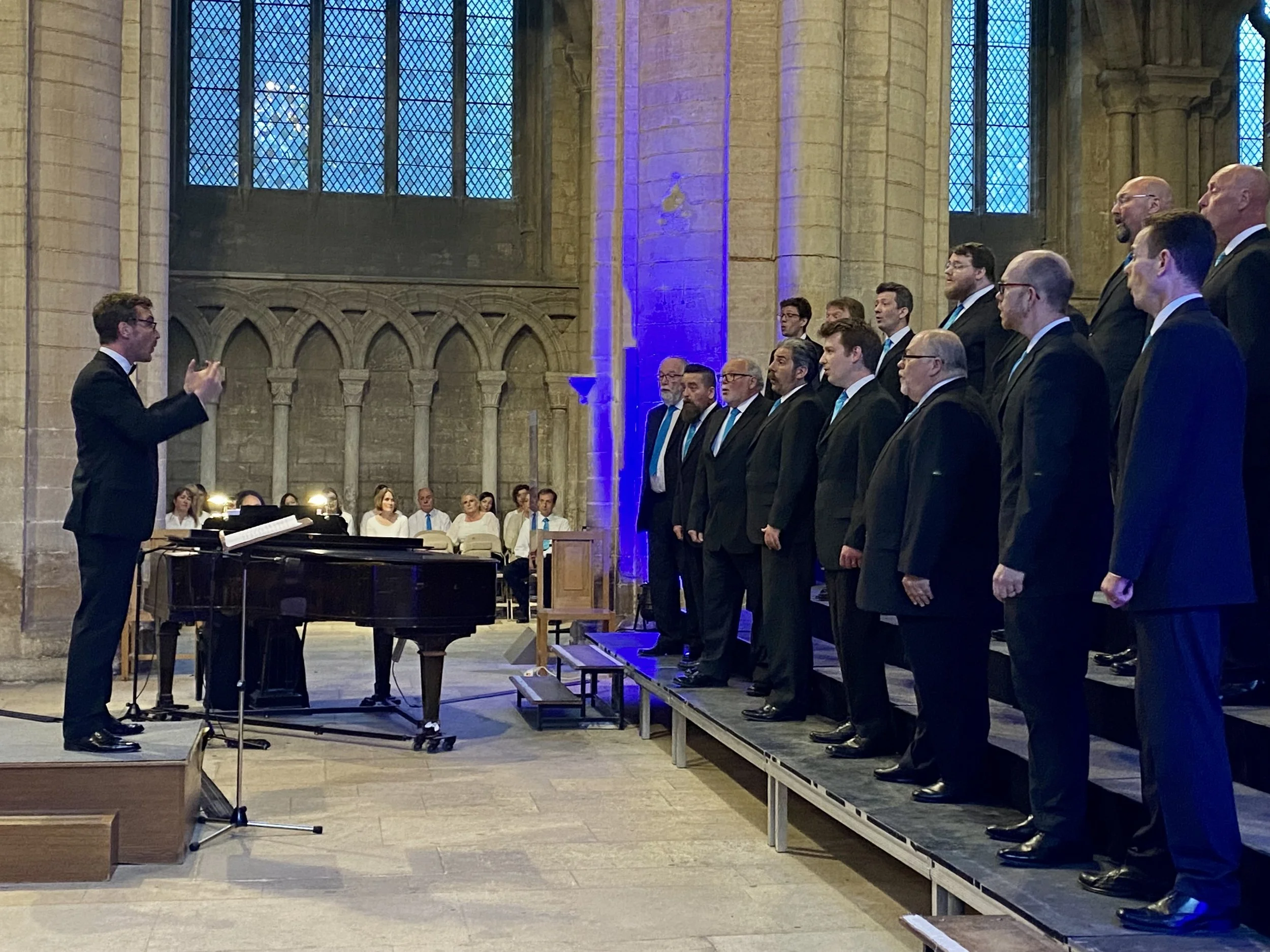
Male/lower voice choirs often talk about recruitment, repertoire, uniforms, and the perennial question of “raising standards”.
Much less often do we talk honestly about the basic economics that sit underneath the rehearsal room. Yet many of the challenges choirs face come down to something far simpler than musical ambition or organisational leadership. They come down to arithmetic.
Start with a straightforward question: what should a rehearsal actually cost?
The Musicians’ Union publishes indicative rates for professional engagements, and organisations such as Making Music regularly gather data on what amateur ensembles pay their musicians.
The figures vary, but the broad picture is clear. A professional musician engaged for a rehearsal might reasonably expect something in the region of £180–£220 for a rehearsal. Accompanists working regularly with amateur ensembles may command slightly less, but still comfortably above £100 per rehearsal.
These numbers are not extravagant. In fact, they are broadly consistent with inflation. A rehearsal fee of £100 in 2004 would need to be roughly £185 today simply to retain the same purchasing power. The sector has not suddenly become expensive; the wider economy has simply moved on.
Now consider the financial base of many male/lower voice choirs.
Imagine a fairly typical ensemble rehearsing forty times per year and engaging both a conductor and an accompanist. If the conductor were paid £180 per rehearsal and the accompanist £120, the annual cost of musical leadership would look like this:
Conductor: £180 × 40 = £7,200
Accompanist: £120 × 40 = £4,800
Total rehearsal leadership cost: £12,000 per year.
And that is before the choir has paid for its rehearsal venue, bought a single piece of music, renewed its insurance, printed a programme, or entered a festival. Add even modest running costs and the annual operating requirement quickly moves towards £15,000 or more.
Now divide that by membership.
With twenty members, subscriptions would need to be about £750 per singer.
With thirty members, about £500 each.
With forty members, around £375.
And that is precisely the point. For a small male/lower voice choir, funding professional musical leadership entirely from subscriptions very quickly becomes absurd. A twenty-member choir would need to charge £750 per singer per year simply to cover basic musical and running costs. Spread across forty rehearsals, that is £18.75 per rehearsal, per member before anyone has sold a concert ticket or commissioned a note of music. Clearly ludicrous for most amateur choirs.
Even at thirty members, £500 per year is beyond what many singers would regard as realistic. The arithmetic is brutal: once membership falls to that level, subscriptions alone are no longer a credible basis for sustaining professional standards.
Male/lower voice choirs may also be less likely than some other ensembles to notice how far professional fees have drifted from economic reality. Many committees are made up of older, often retired members who quite understandably anchor their expectations to what things used to cost when they themselves were working. But inflation has quietly changed the ground beneath our feet.
To give a simple comparison, a salary of £25,000 in 2006 would need to be roughly £42,000 today to have the same purchasing power. When viewed in that light, rehearsal fees that have barely moved in twenty years are not stable at all—they represent a substantial real-terms reduction. The difficulty is not bad will; it is that inflation works slowly and invisibly, and unless organisations consciously adjust for it, yesterday’s reasonable fee gradually becomes today’s unsustainable one.
So what has to flex?
In reality, it is the fees that take the hit. When the sums refuse to balance, it is rarely the subscriptions that increase dramatically, and rarely the rehearsal schedule that shrinks. Instead, the adjustment is quietly absorbed by the people standing at the front of the room. The conductor and accompanist accept less than the professional rate. Over time, the sector normalises this arrangement, and the reduced fee begins to feel ordinary.
But the reality is clear: it is the professionals who are subsidising the activity.
And this sits at the heart of a persistent problem in the male/lower voice choir world. Many choirs genuinely want experienced, qualified musicians leading their rehearsals. They want conductors who understand vocal technique, style, interpretation and programming. They want accompanists who can support singers properly and help lift the musical standard of the room. Yet the financial structure of many choirs quietly makes that difficult. If the fee on offer is substantially below the level a professional musician can sustain, the pool of people able to take on that work inevitably becomes smaller.
Consider a more optimistic example. A choir with thirty-five members, each paying £250 per year, generates £8,750 in subscriptions. Spread across forty rehearsals, that allows £218.75 per rehearsal for musical leadership. Split between conductor and accompanist, that is roughly £109 per musician per rehearsal.
Against a recommended rehearsal fee of around £180–£220, that represents only about 55–60% of the professional rate, and that is before any other choir expenses are paid.
None of this is a criticism of choirs. It is simply the financial reality of trying to sustain a musically ambitious organisation on a small economic base. But once the numbers are written down clearly, they at least allow for an honest conversation. Because if choirs want consistently strong musical leadership, the arithmetic that supports the rehearsal room has to make sense.
So what is the answer?
There is no single solution, but there are only a few levers available. Choirs can increase membership, raise subscriptions, generate more income from concerts and partnerships, or rethink how they structure their activity across the year. Most likely, it will be some combination of all four.
What matters is recognising that professional musical leadership is not free.
If we want experienced musicians leading our choirs, the financial model has to support them. Once we accept that reality, we can start building choirs whose ambitions are matched by the economics that sustain them.